
Watching Artemis II Launch with My Students
 April 19, 2026


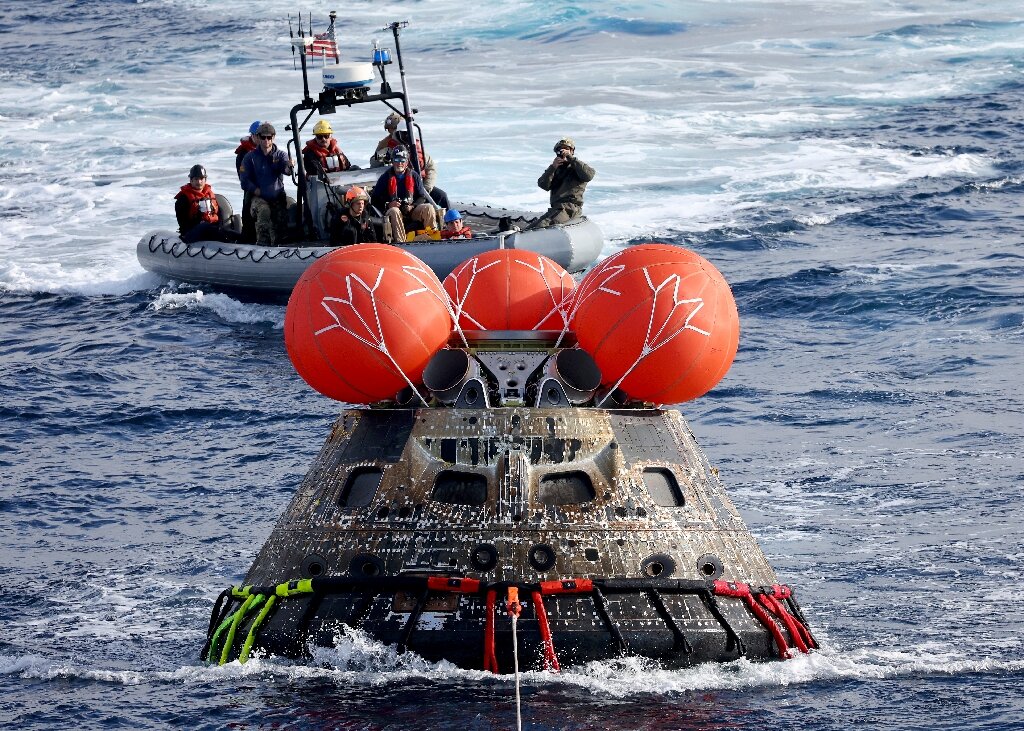
I watched the Artemis II launch with my students as it began its 10-day flyby mission around the Moon. Unsurprisingly, they were thrilled to be watching live television during class time!
Of course, it was too good a learning moment to pass up. As we watched, I shared a few key facts about the mission. The crew itself marks several historic milestones: Christina Koch will be the first woman on a lunar mission, Victor Glover the first Black astronaut, and Jeremy Hansen the first Canadian to travel to the Moon. Commander Reid Wiseman, at age 50, will also be the oldest person to journey into deep space.
We also talked about what comes next. If all goes according to plan, Artemis III could land astronauts on the lunar surface as early as 2028.
One of the joys of teaching is how often the best moments are unplanned. As students began sharing stories about visits to NASA space centers, one student quietly added, “Did you know that Artemis is a goddess from Greek mythology?”
That simple comment opened the door to a whole new discussion. We learned that Artemis is the goddess of the hunt and wilderness, closely associated with the Moon. She is the daughter of Zeus, the twin sister of Apollo, and known as Diana in Roman mythology.
From there, it felt only natural to connect back to NASA’s earlier Apollo missions - especially Apollo 11, the first mission to land humans on the Moon. We explored how Apollo, in Greek mythology, is the god of light, music, poetry, prophecy, and medicine, and how his name carries over into Roman tradition as well.
Moments like these are a reminder of what makes teaching so rewarding. A single question or observation can connect science, history, and mythology, drawing students into a shared curiosity and turning an ordinary lesson into something memorable.
#HolisticLearning #WholeChildEducation #LearningBeyondTextbooks #InteractiveLearning #StudentEngagement
How Curiosity Builds Confidence in Children
Sometimes it’s the little things that grab our attention and influence the way we teach. That’s…
The Power of Family Partnerships in Relation
Sometimes it’s the little things that grab our attention and influence the way we teach. That’s…
STEM, Music, and Creativity: A Blended Approach
Sometimes it’s the little things that grab our attention and influence the way we teach. That’s…